Source Industrial Ball Valve Safety Lockout for Maintenance, Repairs, and Safety
Explore 30 verified listings for industrial ball valve safety lockout devices designed for maintenance, repairs, and safety protocols. Compare features like material, dimensions, and certifications from suppliers in Guangdong and Zhejiang to find the right solution for your needs.
Key considerations
Products List






Comprehensive Sourcing Guide
Strategic Sourcing Guide for Industrial Ball Valve Safety Lockout Devices
Procuring industrial ball valve safety lockout devices requires a disciplined approach that balances technical compatibility with rigorous compliance verification. These devices are critical components in Lockout/Tagout (LOTO) programs, designed to isolate energy sources and prevent accidental equipment activation during maintenance. The market offers a diverse array of solutions, ranging from simple polypropylene locks to complex stainless steel assemblies. Buyers must navigate a landscape where product attributes, such as material composition, dimensional fit, and certification status, vary significantly between suppliers. This guide outlines the essential factors for sourcing these safety devices effectively, ensuring that procurement decisions are grounded in verified facts rather than unconfirmed marketing claims.
Technical Specifications and Material Compatibility
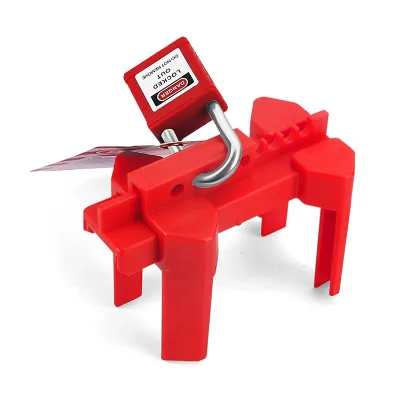
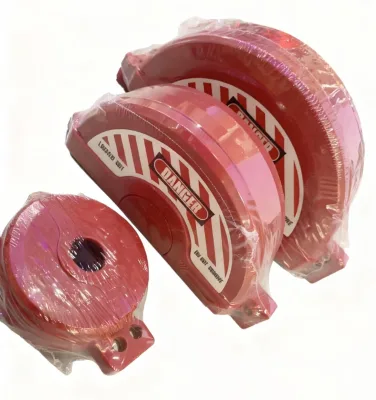
The primary technical consideration when sourcing ball valve lockouts is the compatibility between the device and the specific valve geometry. The supplied data indicates that models are designed for specific valve sizes, such as those applicable to DN8-D50 ball valves or DN50-DN200 ball valves. Furthermore, other listings specify suitability for pipes ranging from 13-64mm or 73mm-215mm. This variation underscores the necessity for buyers to measure their existing valve handles and stems precisely before placing an order. A mismatch in dimensions can render a lockout device ineffective, posing a severe safety risk.
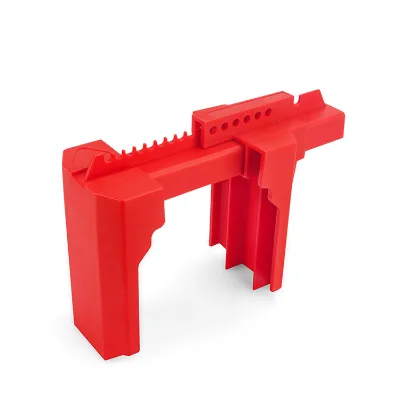
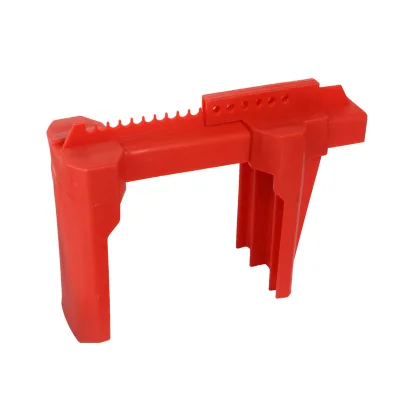
Material selection is equally critical, as it dictates the device's durability and resistance to environmental factors. The observed product range includes devices manufactured from Polypropylene (PP) and Stainless Steel. Polypropylene models are often highlighted for features such as being anti-rust, waterproof, and durable, making them suitable for general industrial environments. In contrast, stainless steel options provide enhanced mechanical strength for more demanding applications. The "Tough and Durable Polypropylene" designation suggests a specific formulation intended to withstand harsh conditions, but buyers should verify the exact grade of plastic or steel against their site's chemical and physical exposure profiles. Additionally, the "Adjustable" feature noted in certain models, such as those with auxiliary rear gear parts, offers flexibility for handling valves with varying handle sizes, reducing the need for a vast inventory of fixed-size locks.
Compliance, Certification, and Safety Standards
In the realm of industrial safety, certification is not merely a formality but a prerequisite for compliance with occupational health and safety regulations. The available data lists several certifications, including CE, ISO9001, ISO14001, and OHSAS18001. The presence of CE marking indicates conformity with health, safety, and environmental protection standards for products sold within the European Economic Area. ISO9001 certification suggests that the manufacturer has a quality management system in place, while ISO14001 and OHSAS18001 point to commitments to environmental management and occupational health and safety, respectively.
However, buyers must exercise caution when interpreting these certifications. The data shows that some listings mention specific certificates, while others reference general standards like ISO 9001 without specifying the scope. It is vital to request valid, up-to-date certification documents directly from the supplier to confirm that the specific model being purchased is covered under the certification. Relying on a general claim of "CE" without verifying the specific product scope can lead to non-compliance. Furthermore, while the data mentions standards like ISO 4427, this is a standard for polyethylene pipes and may not be directly applicable to the lockout device itself; buyers should verify which specific safety standards govern the lockout device's design and performance in their jurisdiction.
Cost Drivers and Pricing Dynamics
The pricing for industrial ball valve lockouts is influenced by several distinct factors, primarily material composition, customization requirements, and order volume. The observed price range in the market spans from $0.50 to $30.27 USD. This wide disparity is largely driven by the choice between polypropylene and stainless steel materials. Stainless steel devices typically command a higher price due to the raw material costs and more complex manufacturing processes involved. Conversely, polypropylene options are generally more cost-effective, making them attractive for high-volume procurement where budget constraints are a priority.
Customization is another significant cost driver. The data indicates that "Customized" dimensions and colors are available, and OEM (Original Equipment Manufacturer) services are acceptable. Customizing the color to match a facility's specific safety coding system or altering the dimensions to fit unique valve configurations will inevitably increase the unit cost. Additionally, the Minimum Order Quantity (MOQ) plays a role in the final landed cost. The observed MOQ range is 1 to 1000 units. Buyers purchasing small quantities may face higher per-unit costs, whereas those ordering in bulk can leverage economies of scale. The "Sample: Samples Freely" attribute suggests that suppliers are willing to provide prototypes, which can be a strategic move for buyers to validate fit and quality before committing to a large order, potentially mitigating the risk of costly returns or replacements.
Typical Applications and Operational Environments
Industrial ball valve lockouts are designed for a broad spectrum of applications, ranging from heavy industrial settings to household use, though the primary focus remains on industrial safety. The data specifies "Usage: Industrial" and "Usage: Household," indicating versatility, but the "High Safety" and "Anti-Theft" features suggest a primary design intent for secure industrial environments. These devices are essential for preventing the unauthorized or accidental operation of ball valves in chemical processing plants, water treatment facilities, oil and gas refineries, and manufacturing plants.
The specific application dictates the required features. For instance, in environments where corrosion is a concern, such as chemical plants or outdoor water treatment facilities, the "Anti-Rust" and "Waterproof" attributes of polypropylene or stainless steel models become paramount. In facilities with strict color-coding protocols, the availability of "Red" or "Customized" colors allows for consistent visual management. The "Lock Type: Mechanical Lock" specification confirms that these devices rely on physical barriers rather than electronic systems, which is often preferred for its reliability and independence from power sources. The "Main Product" listing, which includes Safety Padlocks and Lockout Hasps, suggests that these ball valve lockouts are often part of a broader LOTO ecosystem, requiring compatibility with other locking devices to ensure a comprehensive isolation strategy.
Supplier Evaluation and Geographic Considerations
When evaluating potential suppliers, geographic origin and production capabilities are key indicators of reliability. The data reveals that products originate from "Guangdong, China" and "Zhejiang, China." Both regions are established manufacturing hubs with extensive supply chains for industrial safety equipment. Guangdong is known for its electronics and general manufacturing prowess, while Zhejiang has a strong reputation for machinery and hardware production. Buyers should verify the specific factory location to assess logistics capabilities and potential lead times.
Supplier evaluation should also focus on their ability to meet customization and quality standards. The "OEM/ODM: Acceptance" and "Customization: Available" attributes indicate that suppliers are flexible and capable of tailoring products to specific buyer needs. However, buyers must ensure that the supplier has the technical capacity to maintain quality during customization. The "Product Name: Ball Valve Lockout" and "Model Number" variations (e.g., BD-F01, BD-F02, BD-F03) suggest a structured product line, which is a positive sign of an organized manufacturer. Additionally, the "Transportation: by Express, Air, Sea" options provide flexibility in logistics, allowing buyers to choose the most cost-effective or time-sensitive shipping method based on their urgency.
Quality Control and Long-Term Procurement Strategy
Ensuring long-term value requires a robust quality control strategy. The "Net Weight: 210g" specification for certain models provides a tangible metric for quality verification; significant deviations from this weight could indicate material inconsistencies or manufacturing defects. Buyers should establish a protocol for inspecting incoming shipments, checking for physical damage, verifying color consistency, and confirming that the lock mechanism functions smoothly. The "Dimension: Customized" attribute necessitates a rigorous dimensional inspection process to ensure the lockout device fits the valve handle securely.
For long-term procurement, building a relationship with a supplier that offers "Samples Freely" and accepts OEM orders is advantageous. This allows for continuous product validation and the ability to adapt to changing valve configurations over time. The "Selling Units: Single item" flexibility suggests that suppliers can accommodate both trial orders and bulk purchases without restrictive packaging constraints. Furthermore, the "Packing: Carton" or "Catton" (likely a typo for Carton) specification highlights the importance of proper packaging to prevent damage during transit. Buyers should specify packaging requirements to ensure that the devices arrive in pristine condition, ready for immediate deployment.
Comparison of Key Product Attributes
To facilitate decision-making, the following table summarizes the key attributes observed in the product data, highlighting the variations buyers must consider.
| Attribute | Observation A | Observation B | Observation C |
|---|---|---|---|
| Material | Polypropylene | Stainless Steel | PP (Polypropylene) |
| Color | Red | Customized | Red, Other Colors Customized |
| Applicable Valves | DN8-D50 | DN50-DN200 | 13-64mm Pipe |
| Certification | CE | CE, ISO9001, ISO14001, OHSAS18001 | Ce, ISO9001, ISO14001, OHSAS18001 |
| Origin | Guangdong, China | Zhejiang, China | Zhejiang |
| Model Number | BD-F01 | BD-F02 | BD-F03/F03N/F04 |
| Feature | High Safety, Anti-Theft | Adjustable | With Auxiliary Rear Gear Parts |
| Usage | Industrial | Household, Industrial | Industrial |
This comparison illustrates that while the core function remains the same, the specific implementation varies. A buyer must select the model that aligns with their specific valve sizes, environmental conditions, and safety certification requirements.
Conclusion
Sourcing industrial ball valve safety lockout devices is a complex process that demands attention to detail regarding technical specifications, material durability, and regulatory compliance. The market offers a wide range of options, from basic polypropylene locks to advanced stainless steel assemblies, each with unique advantages. Buyers must rigorously verify certifications, confirm dimensional compatibility, and evaluate supplier capabilities to ensure the selected devices meet their safety standards. By adhering to a disciplined procurement strategy that prioritizes verified facts over marketing claims, organizations can secure reliable lockout solutions that protect personnel and equipment effectively. The availability of customization and sample options further empowers buyers to make informed decisions that align with their specific operational needs.
FAQs
What materials are used for industrial ball valve safety lockout devices?
These devices are commonly manufactured from Polypropylene or Stainless Steel. Polypropylene models offer anti-rust and waterproof features, while stainless steel provides enhanced mechanical strength for demanding industrial environments.
Which certifications are available for industrial ball valve safety lockout products?
Products often carry CE, ISO9001, ISO14001, and OHSAS18001 certifications. Buyers should verify that specific models are covered under these certificates to ensure compliance with occupational health and safety regulations.
Can industrial ball valve safety lockout devices be customized for specific valves?
Yes, customization is available for dimensions, colors, and OEM requirements. Models exist for specific valve sizes like DN8-D50 or DN50-DN200, and adjustable features allow fitment for varying pipe diameters.
How do pricing and MOQ vary for industrial ball valve safety lockout devices?
Prices range from 0.5 to 30.27 USD depending on material and customization. Minimum Order Quantities vary from 1 to 1000 units, with bulk orders often benefiting from economies of scale compared to single item purchases.
Where are industrial ball valve safety lockout devices typically manufactured?
Products originate from manufacturing hubs in Guangdong and Zhejiang, China. These regions provide established supply chains for industrial safety equipment, offering options for express, air, or sea transportation methods.
What is the lock type used in industrial ball valve safety lockout devices?
The primary lock type is a mechanical lock designed for physical isolation. These devices function as part of a Lockout Tagout system to prevent accidental equipment activation during maintenance procedures.